November 17, 2026
Why I keep every frame
The same data, processed again two years later. Two before-and-afters, and why I never delete my raw files.
Every image on this site starts as hundreds or thousands of individual exposures, plus the calibration frames (darks, flats and flat-darks) that clean them up. It's tempting to keep the final picture and throw the rest away. I don't. Everything goes onto an archive drive, organized by object and session: the raw frames, the calibration frames, the stacked masters and the processing logs.
The reason is simple: my processing gets better every year, and so do the tools. Data I captured two years ago can become a much better image today without another night under the sky. Here are two examples from this month.
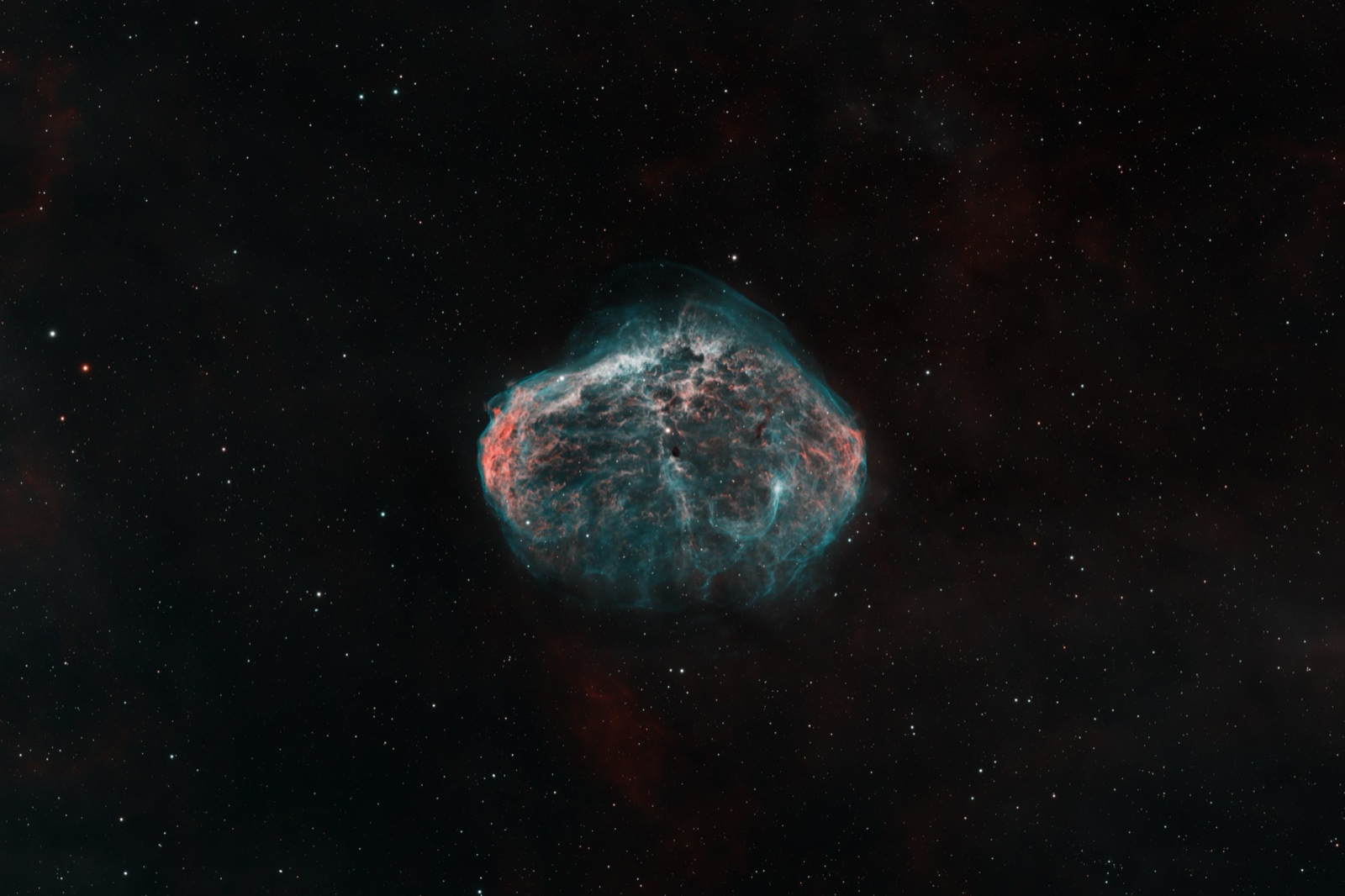
The Crescent Nebula: same data, new processing
I shot the Crescent in July 2024 with the FF107 and ASI2600MM through 3 nm hydrogen-alpha and oxygen III filters: 25 hours over five nights. Here's how I processed it at the time:
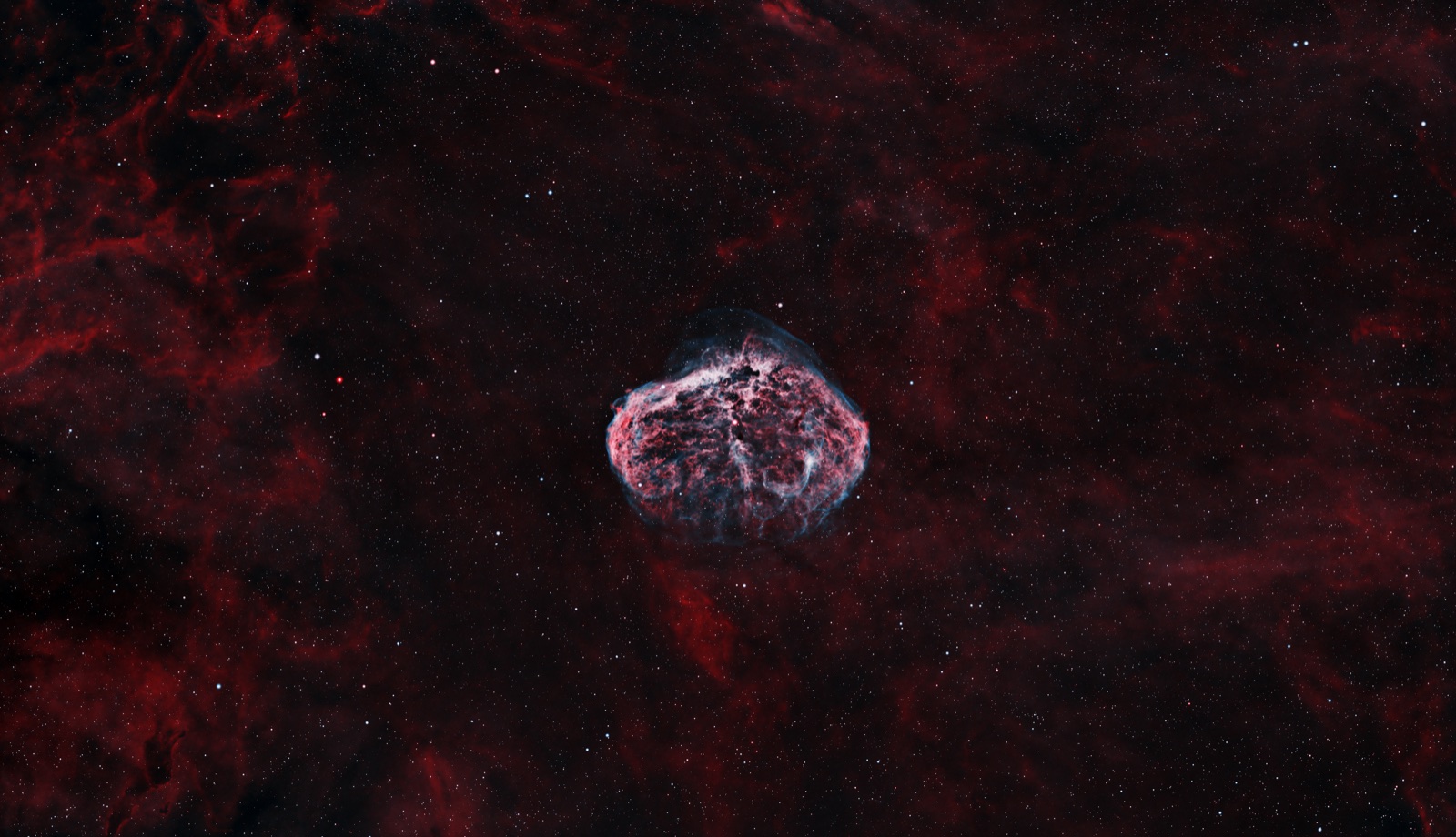
Looking back, I pushed it too hard. The whole field went saturated red, the faint hydrogen clouds turned into a blotchy red web, and the brightest parts of the shell were clipped to flat pink.
In November 2026 I went back to the same stacked masters. No new data, not even a restack. This time the processing used BlurXTerminator to tighten the stars and sharpen the shell, NoiseXTerminator to clean up the faint areas, and StarXTerminator to take the stars out so the nebula could be stretched on its own. I stretched the hydrogen and oxygen gently and separately, and combined them so hydrogen is red and oxygen is teal.
The surprise was the oxygen. There's a faint teal "skin" of oxygen around the top of the shell, extending beyond the red hydrogen. It was in the 2024 data all along, buried under the red. Darkening the background the usual way would have dimmed it too, so I darkened the background through a mask that protects the shell and that teal dome.
The Iris Nebula: frames I never used
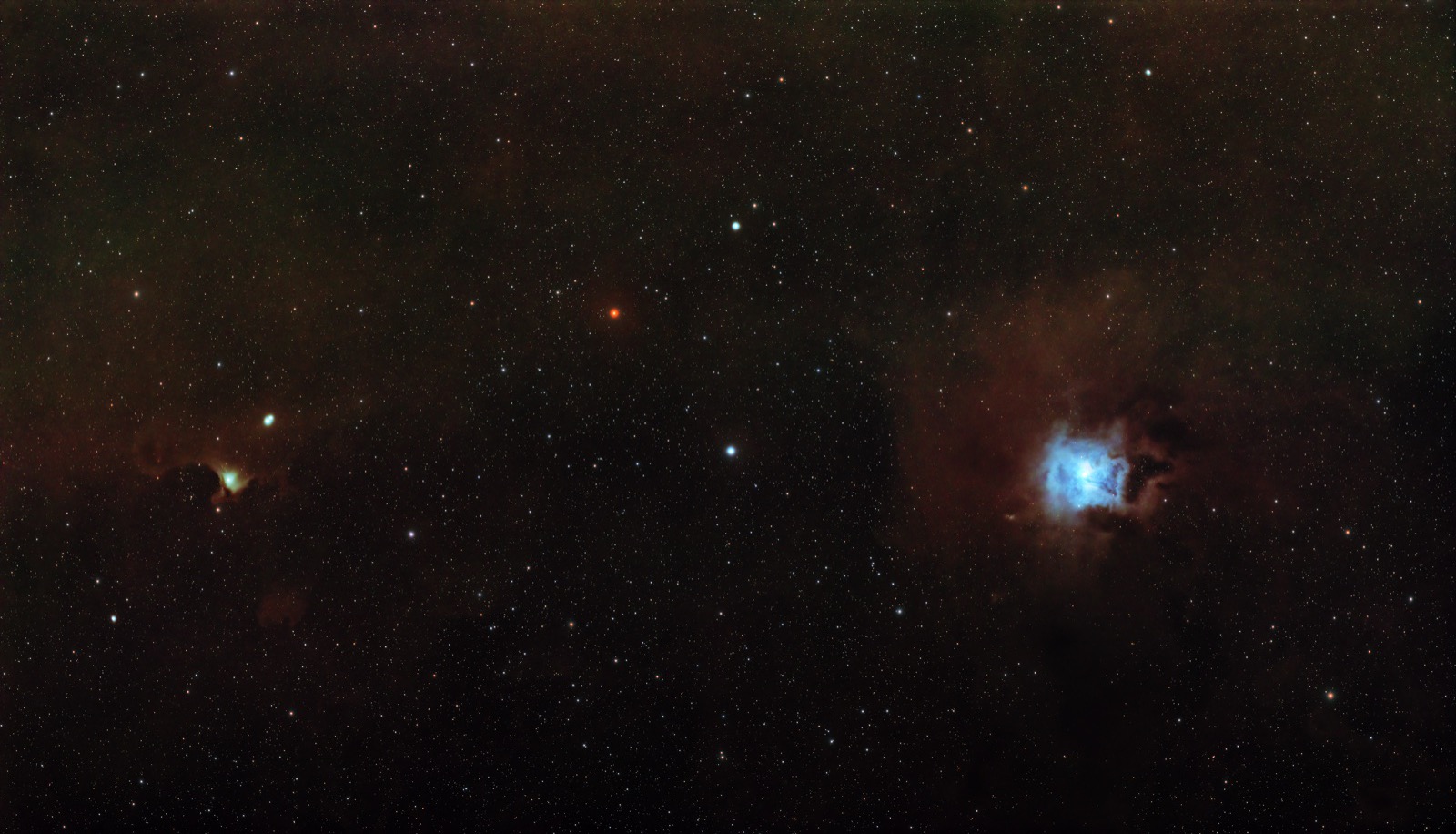
The Iris and the Ghost were shot in August 2024. My original version had a blown-out blue core, muddy brown-green dust and a green cast across the bottom of the frame:
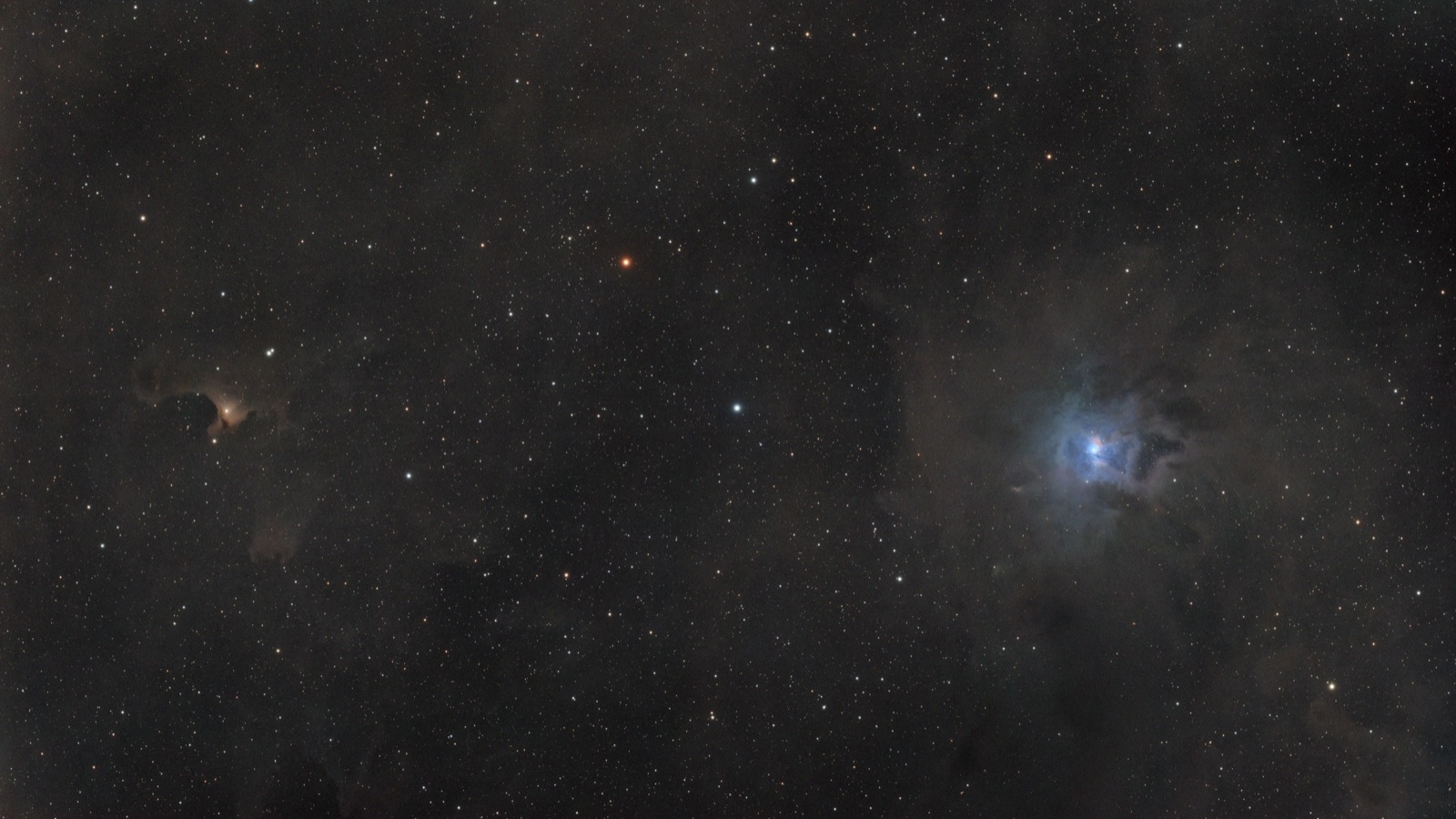
This time I went back further, to the raw frames themselves. Grading all 1,000 of them by star shape, sharpness and background, I rejected 127, but I also found extra luminance frames from that August that never made it into the first stack. That raised the usable luminance from 8.6 hours to 14.7 hours, about 70% more, from data I already had. The new version uses 22.6 hours in all.
The Iris is a reflection nebula: dust lit by a nearby star, not glowing gas. So this time I treated it as a broadband target, with luminance plus red, green and blue, and let the narrowband filters sit out. The result shows the dusty clouds that fill the whole field, which were just mud in the first version.
What I keep
- Every raw frame, even the ones I rejected the first time. Grading rules change, and a frame that looked marginal can be fine.
- The calibration frames for each session. Without the right flats you can't restack.
- The stacked masters and the logs, so I can start over from the masters without restacking, like with the Crescent.
- The old finals, so I can see how far things have come.
Hard drives are cheap. Clear nights in Dallas aren't.