November 17, 2026
What a little smart telescope can do
Three years with a Seestar S50, plus two months with the new S50 Pro: from 90 minutes on Andromeda to 40 hours on the Dumbbell, all from a Dallas backyard.
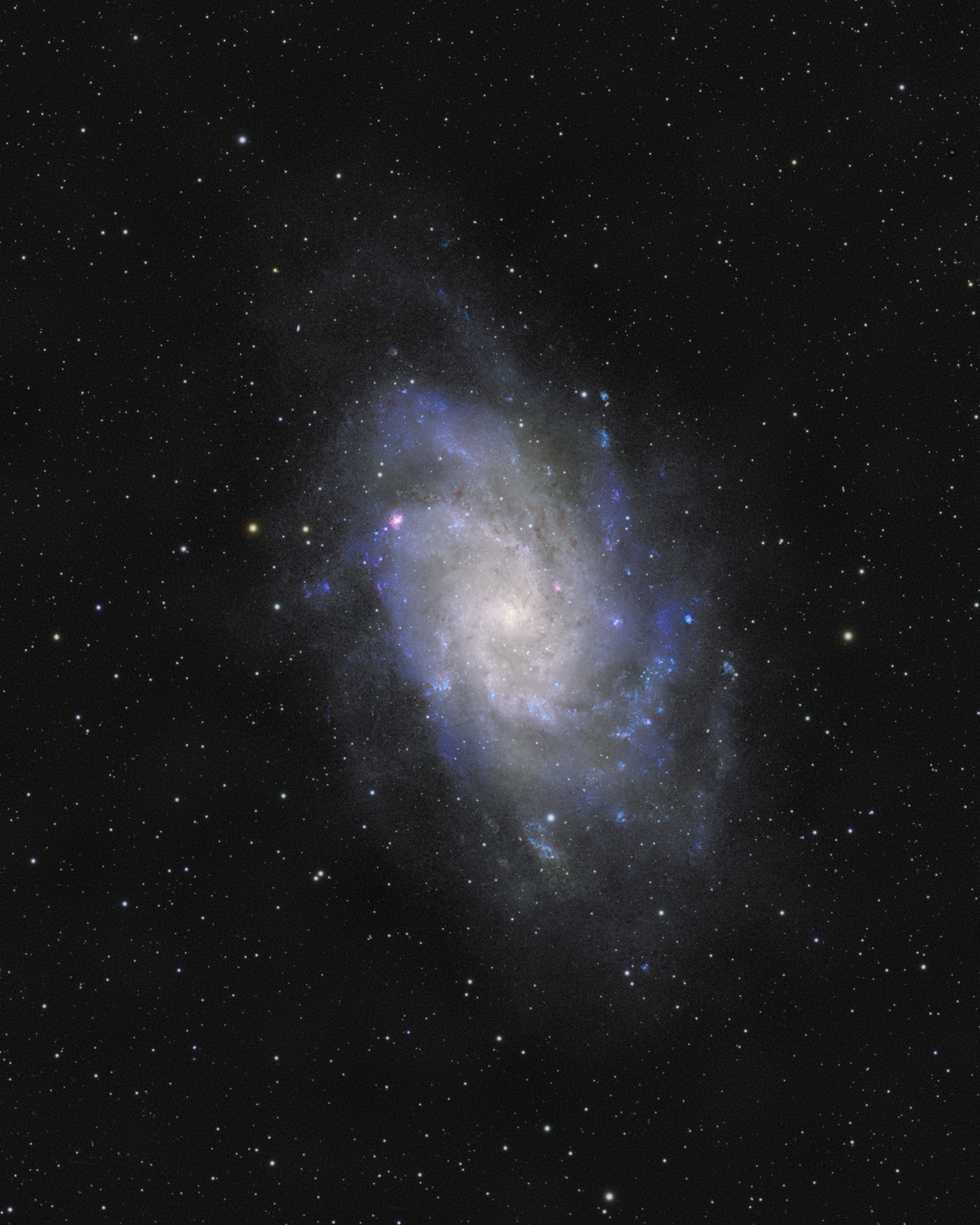
My big rig takes the better part of an hour to set up: mount, telescope, camera, filter wheel, guide scope, cables, polar alignment, focus. A smart telescope puts all of that in one box. The ZWO Seestar is a 50 mm telescope, camera, motorized mount, filters and a small computer in a case the size of a lunchbox. You set it on a tripod, pick a target on your phone, and it finds the object, focuses, tracks and stacks the frames as it goes.
My first Seestar images, with the S50, are from November 2023. I thought of it as a grab-and-go scope. It turned into a lot more than that.
The first nights
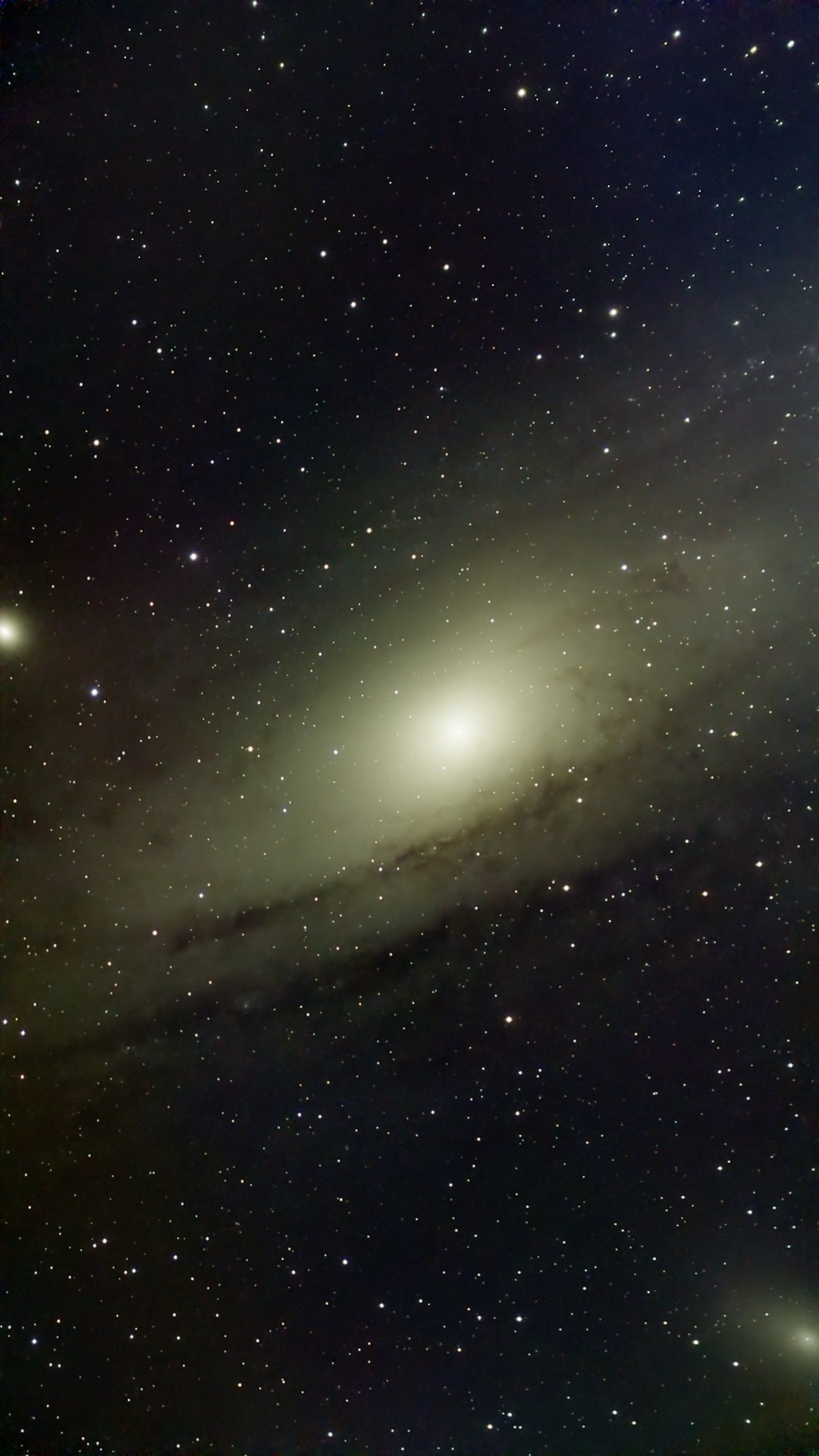
My first images were short sessions of 10-second frames, the way the Seestar works out of the box. Andromeda was 513 frames, about an hour and a half, and it was already more than I expected from something this small.
It's also the scope I grab when something happens fast. When comet Tsuchinshan-ATLAS showed up in October 2024, I took the Seestar to Lake Brownwood, and two minutes of exposures was enough.
Equatorial mode
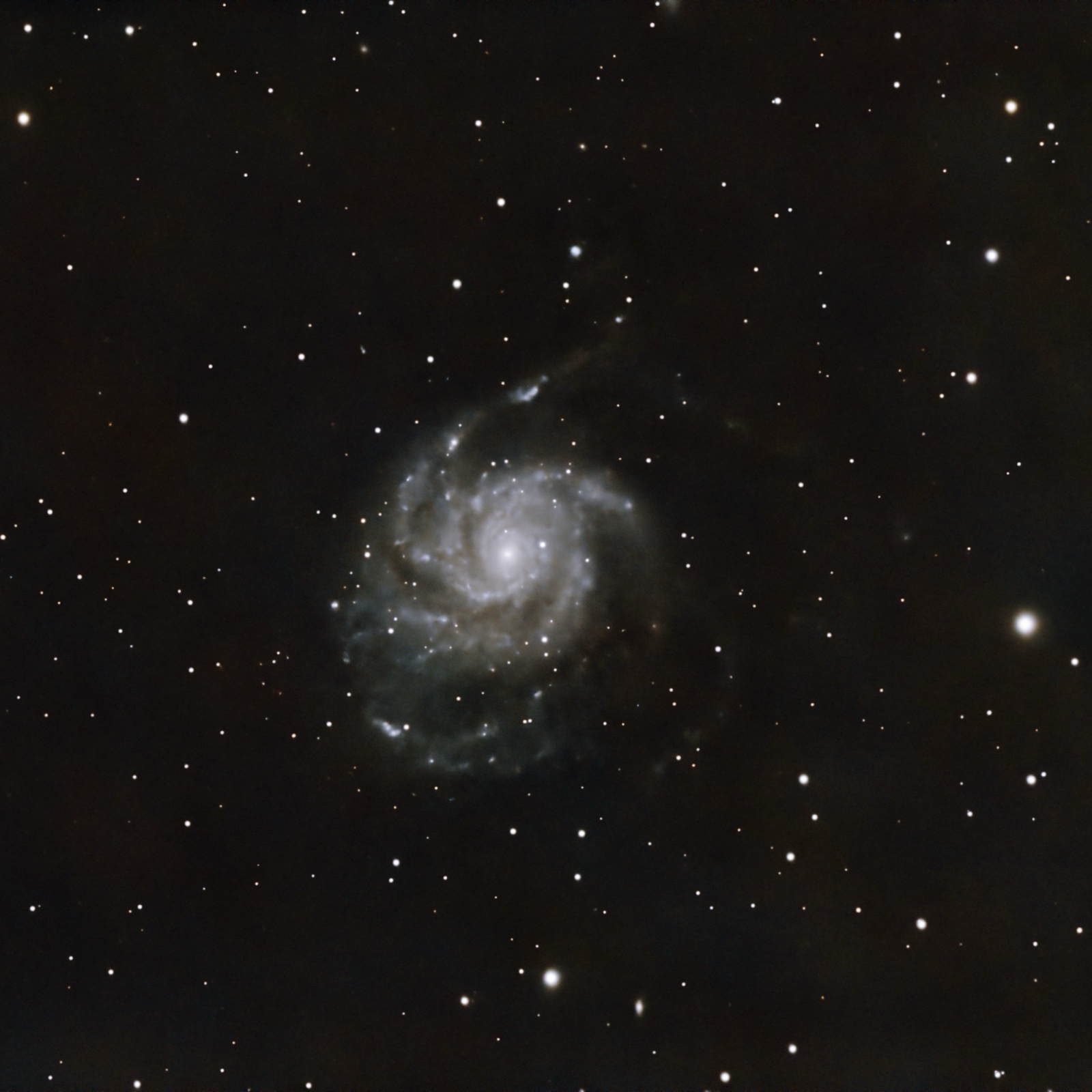
Out of the box the Seestar tracks in alt-azimuth, which makes the field slowly rotate, so each frame has to stay short. Tilted on a wedge so its axis points at the celestial pole, it tracks the way a real equatorial mount does: no field rotation, so it can take 30-second frames. In April 2025 I gave M101 a week of clear nights: 2,701 frames, 22.5 hours.
Hours are the secret
The biggest lesson is that a 50 mm telescope can go deep if you give it time. These two images of M33 are the same galaxy from the same backyard, two years apart. It isn't a controlled test, since both the telescope and the exposure time changed, but it shows how far the combination goes:
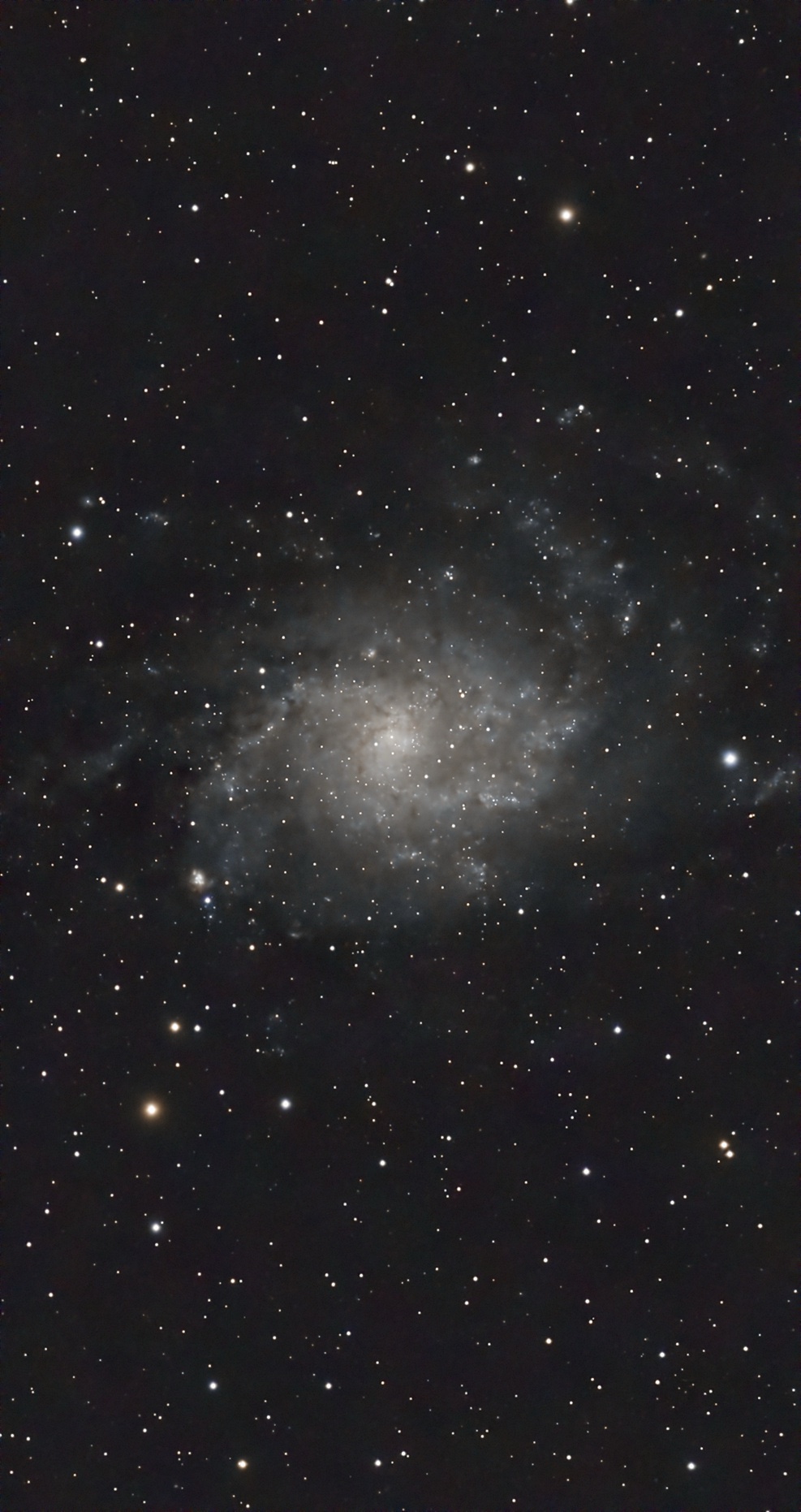
So how much is the new scope, and how much is the time? Both Seestars have the same size pixels at almost the same focal length, so each pixel sees the same patch of sky about equally well. The S50 Pro, which I've only had since September 2026, mostly adds a wider field (2.8° instead of 1.46°), sharper stars from its 4-element lens and a somewhat more sensitive sensor. The depth comes mostly from time: 44 times the exposure gives about 6.6 times the signal-to-noise, since noise averages down with the square root of the number of frames. The original S50 shows the same thing on its own: given 40 hours on the Dumbbell Nebula, it pulled out a faint halo that 4.5 hours only hinted at (the story is here).
What it can't do
A 50 mm lens collects about a fifth of the light of my 107 mm refractor, and its small pixels can't match a cooled astronomy camera. Compare the Crescent Nebula from the S50 with the same nebula from the big rig, 25 hours through narrowband filters. You also give up control: the filters are built in, and you can't swap the camera or the lens.
But that isn't really the point. I can set the Seestar out at dusk, start it from my phone and let it run all night on its own. It has added hundreds of hours of data I would never have collected otherwise, and some of my favorite images on this site came from it.